Within Salamanca UFOs
Were Bejar's Strange Lights Really Strange?
Ordinary lights around Bejar help separate Salamanca's dramatic close-encounter lore from sightings that may have simpler causes.
On this page
- Reported light sightings around Bejar
- Satellites, vehicles and night sky confusions
- How smaller reports reshape big legends
Page outline Jump by section
Introduction
The most useful way to read the “strange lights” reports around Béjar is not as a separate grand mystery, but as a control group for Salamanca’s more dramatic UFO lore. The area has produced or attracted stories of night-time lights, luminous objects near rural roads, skywatching gatherings and social-media sightings. Yet the strongest evidence points to a more modest conclusion: many Béjar-area light reports are weakly documented, episodic and highly vulnerable to ordinary explanations such as meteors, satellite trains, distant vehicles, drones, aircraft lights and the misleading effects of mountain terrain.
That does not make them worthless. They matter because they show how Salamanca’s UFO reputation is built not only from headline cases such as the 1974 Lagunilla encounter, but also from smaller rural sightings that keep the story alive. Around Béjar, the real question is often not “was it alien?” but “what kind of light was seen, from where, for how long, and under what sky conditions?”
Why Béjar Is Good Ground for Misread Lights
Béjar sits in a landscape that encourages skywatching and confusion in equal measure. The Sierra de Béjar and Candelario area forms part of the Sistema Central, with high ground rising around 2,400 metres at peaks such as La Ceja and Calvitero, while the wider comarca contains mountain roads, wooded slopes, villages, ski infrastructure and open rural horizons. The Salamanca provincial tourism site describes this area as more than 10,000 hectares of mountainous terrain, and Spain’s geological inventory places the high summit surface of the Sierra de Béjar above 2,100 metres, with the Canchal de la Ceja reaching roughly 2,428 metres.[La Salina Turismo]turismo.lasalina.esLa Salina Turismo| Salamanca EmociónLa Salina Turismo| Salamanca Emoción[IGME]info.igme.esIELIG - CI081: Superficie de Cumbres de la Sierra de Béjar y complejo glaciar de meseta…
That geography matters for UFO interpretation. A light seen from a valley road can appear to hover when it is actually a vehicle on a higher road, a building light partly hidden by slopes, a piste or maintenance light near La Covatilla, or an aircraft moving behind broken terrain. Hills also create intermittent visibility: a normal light may appear, vanish, reappear and seem to “follow” a car simply because both the witness and the light source are moving through a landscape of ridges, bends and tree cover.
The same landscape also makes the sky more noticeable. Béjar’s own tourism material promotes astrotourism from the Sierra de Béjar, presenting La Covatilla as a suitable place for observing nebulas, star clusters and galaxies. In other words, this is a region where people do look up, where skies can be dark enough for faint objects to stand out, and where unusual lights are more likely to be noticed than they would be in a heavily lit city. Portal turístico oficial de Béjar[turismobejar.com]turismobejar.comPortal turístico oficial de Béjar AstroturismoPortal turístico oficial de Béjar Astroturismo
This cuts both ways. Darker rural skies can make genuine astronomical phenomena easier to see, but they also make satellites, meteors and aircraft seem more striking. The 2016 world atlas of artificial night-sky brightness found that most of the world, and almost all European populations, live under light-polluted skies; that means many observers are not used to seeing a truly active night sky, especially when they travel into rural or mountain areas.[arXiv]arxiv.orgarXiv The new world atlas of artificial night sky brightnessarXiv The new world atlas of artificial night sky brightness
Reported Light Sightings Around Béjar
The public record for Béjar-area lights is thinner than the folklore suggests. There is no neat, official Béjar case file that carries the evidential weight of a military radar incident or a fully documented aviation report. Instead, the material is mostly made up of local retellings, press references, blog summaries, witness memories and later online discussion.
One useful local summary claims that the Béjar area saw multiple light reports in the 1990s and 2000s. It mentions alleged lights seen in July 1997 between the Sierra de Francia and the Béjar area, a Valdesangil report in which a couple described a blue rectangular object, and an August 1997 luminous-object report on roads near Lagunilla. The same piece also notes a 2015 possible sighting with Peña Negra in the background and a 2004 “Alerta Ovni” gathering at La Covatilla, where nearly a hundred people reportedly met for a night of skywatching and discussion.[Álvaro Anula - Periodista y locutor]alvaroanula.comÁlvaro AnulaÁlvaro Anula[Paperblog]es.paperblog.comLa comarca de Béjar: epicentro de actividad OVNI y paranormalLa comarca de Béjar: epicentro de actividad OVNI y paranormal
These details are interesting, but they need careful handling. The 1997 and 2015 references are not, in the sources available here, supported by full contemporaneous case files with original witness interviews, precise bearings, photographs, astronomical checks, aviation checks and weather data. They are better treated as a cluster of local claims than as a verified flap. The 2004 La Covatilla gathering is different again: it shows that the area had enough UFO reputation to draw enthusiasts, but a skywatching event is not itself evidence that unusual craft were present.
The Montalvo de la Estrella case, near the Salamanca–Ávila boundary, helps explain how this regional folklore works. In a later account, Carolino Morán and Esperanza Martín were said to have seen a powerful whitish-yellow light with coloured lights around it on 17 October 1997, while travelling near their rural property. The account also folds in a roadside encounter with unknown youths and later paranormal interpretation, which makes it vivid but also makes it harder to separate the sky observation from legend-building.[Álvaro Anula - Periodista y locutor]alvaroanula.comÁlvaro AnulaÁlvaro Anula
For the Béjar page, the key point is not whether every one of these reports is false. It is that they sit in a grey zone: memorable enough to circulate, but usually too incomplete to resolve. A good rural light report needs time, direction, duration, angular size, movement, weather, Moon phase, nearby roads, aircraft checks and satellite checks. Most small reports from the Béjar area do not appear to preserve that level of detail in public sources.
Satellites, Meteors and the Modern “Train of Lights” Problem
One of the biggest changes in interpreting rural UFO reports is the arrival of satellite constellations. A line of lights crossing a dark sky can look extraordinary, especially to someone who has never seen one before. In May 2021, Castilla y León’s emergency service received calls after people saw a line of lights in the night sky; the service explained that the sight was a train of luminous satellites visible in darkness.[Europa Press]europapress.esUn tren de satélites luminosos se deja ver en el cielo nocturno y motiva llamadas al 112…
That explanation is highly relevant to Béjar. Space.com describes Starlink trains as close groups of lights visible soon after launch, moving together in a straight line and often being mistaken for UFOs. They are usually best seen shortly after sunset or before sunrise, when the satellites reflect sunlight while the ground below is dark.[Space]space.comStarlink satellite train — how to see and track it | SpaceStarlink satellite train — how to see and track it | Space
For a rural observer in the Sierra de Béjar, this can be especially dramatic. A satellite train has several features that match common UFO language: multiple bright points, steady motion, silence, apparent formation and sudden fading. The fading can seem mysterious, but it often happens when the satellites move into Earth’s shadow or when the reflection angle changes. The satellites do not have their own visible lamps; they are seen because they reflect sunlight.[Space]space.comStarlink satellite train — how to see and track it | SpaceStarlink satellite train — how to see and track it | Space
Meteors and bolides are the other major sky-based explanation. Here Béjar has a concrete local example: the “Béjar bolide” of 11 July 2008. Science news agency DiCYT reported that researchers linked the Salamanca fireball to material possibly associated with the Omicron Draconids and the comet Metcalf, describing a rock around one and a half metres in diameter and noting that such bright fireball events can last only a few seconds.[dicyt.com]dicyt.comOpen source on dicyt.com.
That case is important because it shows how a spectacular light over Béjar can be entirely natural and still genuinely remarkable. A bolide can illuminate the sky, fragment, change colour, leave a trail or be seen across a wide area. It may produce honest reports that sound dramatic because the event itself is dramatic. The lesson is not that every Béjar light was a meteor, but that “ordinary” astronomical explanations can be far from ordinary in appearance.
Vehicles, Drones and Rural Road Illusions
Many Béjar-area stories involve roads, slopes or rural travel. That is exactly where misperception becomes easiest. A car headlight on a distant bend can appear to rise or descend. A tractor, quad bike or maintenance vehicle on high ground can look like a light moving across the sky. A light partly hidden by trees can seem to blink or pulse. If the witness is also driving, parallax can make a distant fixed light appear to track the vehicle.
This matters when reading older Salamanca stories. The 1974 Lagunilla case is a dramatic close-encounter narrative, but the smaller Béjar-area light reports are often less specific: a luminous object, a bright presence near a road, a light over a ridge, a shape glimpsed from a moving car. Those are precisely the conditions where reliable distance and size judgement becomes difficult.
Drones add a modern layer. Spain’s air safety agency notes that European drone rules have applied since 31 December 2020 and affect drones regardless of size, with additional national rules applying from 25 June 2024. That does not explain older cases, but it does mean recent rural lights must be checked against drone activity as well as satellites and aircraft.[Seguridad Aérea]seguridadaerea.gob.esOpen source on gob.es.
A drone at night can hover, move silently at a distance, show coloured lights, change direction quickly and appear much closer or larger than it is. In a mountainous area, a drone flown near a viewpoint, ski facility, farm, festival, search operation or property inspection could easily generate a “strange light” report. The presence of drones does not debunk every modern sighting, but it raises the standard for what counts as unexplained.
Why the Smaller Reports Still Matter
Small Béjar-area light reports reshape Salamanca’s UFO history by changing the scale of the question. The province is often remembered through dramatic episodes: the Lagunilla and Valdehijaderos story, alleged roadside pursuit, close-range object descriptions, and later trace or landing claims elsewhere in Salamanca. Béjar’s ordinary lights are useful because they test how much of that wider reputation depends on repeatable patterns rather than isolated landmark stories.
The pattern that emerges is not a clean map of unexplained craft. It is a mix of three things:
- A real skywatching landscape. The Sierra de Béjar is high, visually open and attractive for night-sky observation, so lights are noticed and discussed.
- A folklore amplifier. Once an area is associated with UFOs, later lights are more likely to be interpreted through that lens.
- A strong pool of mundane mechanisms. Satellites, meteors, vehicles, drones and terrain effects are all unusually relevant in this setting.
This is why the Béjar material should not be dismissed, but also should not be inflated. A weak report can still be culturally important if it shows how a local legend survives. It may reveal what people were watching, what they feared, what they expected to see, and how press or online retellings shaped the memory of an event. But cultural importance is not the same as evidential strength.
The Spanish Ministry of Defence UFO archive is a useful benchmark here. Its case files typically include summaries, locations, dates, witness material, weather information and proposed classifications, although the content varies from file to file. That kind of structure shows what a stronger investigation looks like. Most Béjar-area light stories in public circulation do not reach that standard.[Biblioteca Virtual de Defensa]bibliotecavirtual.defensa.gob.esOpen source on gob.es.

A Practical Test for Béjar Light Claims
For readers trying to assess a Béjar-area light report, the most helpful question is not “could this be a UFO?” but “what would need to be ruled out first?” A credible assessment should begin with the simplest checks.
First, note the exact time and direction. Satellite trains and bright individual satellites are time-sensitive; without a time and bearing, a sighting is much harder to test. Second, ask whether the light was a point, a line, a cluster, a glow or a structured object. A line of evenly spaced lights strongly suggests satellites; a sudden bright streak suggests a meteor or bolide; a hovering coloured light near a hillside may point to a drone, mast, vehicle or distant aircraft.
Third, separate motion from apparent motion. A witness in a moving car may experience a fixed light as if it is moving alongside them. In the Béjar landscape, where roads curve through slopes and ridges, this effect can be powerful. Fourth, check whether the sighting happened near dusk or dawn. That is prime time for satellites, because the observer may be in darkness while objects above still catch sunlight.[Space]space.comStarlink satellite train — how to see and track it | SpaceStarlink satellite train — how to see and track it | Space
Finally, look for independent reports with consistent details. The 2008 Béjar bolide was scientifically interesting because it was a real atmospheric event that could be analysed, not merely a lone anecdote. By contrast, a single vague report of a light “near Peña Negra” or “over the road” may remain intriguing but unresolved unless it is tied to photographs, multiple independent witnesses, timing, direction and elimination of ordinary causes.[dicyt.com]dicyt.comOpen source on dicyt.com.
What Béjar Adds to Salamanca’s UFO Map
Béjar’s strange lights matter because they pull Salamanca’s UFO history back down to earth. They remind us that provincial UFO lore is not made only from famous encounters; it is also made from ordinary nights, rural roads, mountain horizons, local newspapers, online posts and the human habit of turning unexplained lights into stories.
The strongest reading is balanced. Béjar is not proven to be an exceptional UFO hotspot in the evidential sense. The public material is too scattered, too dependent on secondary retellings and too open to common explanations. But it is a meaningful local cluster within Salamanca’s wider UFO tradition because it shows how dramatic cases and everyday sky confusions feed each other.
In that sense, the answer to “Were Béjar’s strange lights really strange?” is: sometimes they were strange to the witnesses, and occasionally they may have been genuinely impressive natural events, but the available evidence usually supports caution rather than mystery. The Béjar area is best understood as a place where landscape, darkness, memory and modern sky traffic can make ordinary lights look extraordinary.
Amazon book picks
Further Reading
Books and field guides related to Were Bejar's Strange Lights Really Strange?. Use these as the next step if you want deeper reading beyond the article.
UFOs: Generals, Pilots, and Government Officials Go on the Re...
Contrasts anecdotal lights with stronger documented cases.
The Report on Unidentified Flying Objects
Encourages evidence-first assessment of sightings.
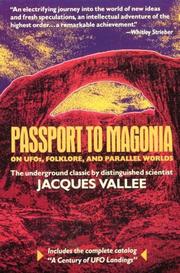
Passport to Magonia: from folklore to flying saucers
Explores how local traditions shape strange-light stories.

eBay marketplace picks
Marketplace Samples
Live-tested eBay searches with available results related to this page.
Endnotes
1.
Source: info.igme.es
Link:https://info.igme.es/ielig/LIGInfo.aspx?codigo=CI081
Source snippet
IELIG - CI081: Superficie de Cumbres de la Sierra de Béjar y complejo glaciar de meseta...
2.
Source: arxiv.org
Title: arXiv The new world atlas of artificial night sky brightness
Link:https://arxiv.org/abs/1609.01041
3.
Source: alvaroanula.com
Title: Álvaro Anula
Link:https://alvaroanula.com/2021/02/09/la-finca-de-salamanca-en-la-que-una-aparicion-aviso-de-un-ovni/
4.
Source: es.paperblog.com
Title: La comarca de Béjar: epicentro de actividad OVNI y paranormal
Link:https://es.paperblog.com/la-comarca-de-bejar-epicentro-de-actividad-ovni-y-paranormal-4291711/
5.
Source: europapress.es
Title: Europa Press
Link:https://www.europapress.es/castilla-y-leon/noticia-tren-satelites-luminosos-deja-ver-cielo-nocturno-cyl-motiva-varias-llamadas-112-20210507103722.html
Source snippet
Un tren de satélites luminosos se deja ver en el cielo nocturno y motiva llamadas al 112...
6.
Source: space.com
Title: Starlink satellite train — how to see and track it | Space
Link:https://www.space.com/starlink-satellite-train-how-to-see-and-track-it
7.
Source: dicyt.com
Link:https://www.dicyt.com/noticias/el-csic-identifica-una-bola-de-fuego-de-dos-toneladas-que-se-estrello-en-la-provincia-de-salamanca
8.
Source: space.com
Title: x starlink satellites
Link:https://www.space.com/spacex-starlink-satellites.html
9.
Source: turismo.lasalina.es
Title: La Salina Turismo| Salamanca Emoción
Link:https://turismo.lasalina.es/es/destinos/sierra-de-bejar-y-candelario
10.
Source: turismobejar.com
Title: Portal turístico oficial de Béjar Astroturismo
Link:https://turismobejar.com/astroturismo/
11.
Source: seguridadaerea.gob.es
Link:https://www.seguridadaerea.gob.es/es/ambitos/drones/normativa-de-uas-drones
12.
Source: bibliotecavirtual.defensa.gob.es
Link:https://bibliotecavirtual.defensa.gob.es/BVMDefensa/exp_ovni/es/micrositios/inicio.do
13.
Source: bibliotecavirtual.defensa.gob.es
Title: defensa.gob.es Listado de títulos
Link:https://bibliotecavirtual.defensa.gob.es/BVMDefensa/exp_ovni/es/consulta/indice_campo.do?campo=idtitulo
14.
Source: turismobejar.com
Title: Entorno natural
Link:https://turismobejar.com/entorno-natural-bejar/
15.
Source: fs.revistas.csic.es
Link:https://fs.revistas.csic.es/index.php/fs/article/download/16384/4814
16.
Source: seguridadaerea.gob.es
Link:https://www.seguridadaerea.gob.es/es/ambitos/drones/operaciones-uas-drones/operaciones-con-uas-drones—categoria-abierta-subcategorias-a1-a2-y-a3
17.
Source: earthsky.org
Title: spacex starlink satellites explained
Link:https://earthsky.org/space/spacex-starlink-satellites-explained/
18.
Source: starwalk.space
Title: spacex starlink satellites night sky visibility guide
Link:https://starwalk.space/en/news/spacex-starlink-satellites-night-sky-visibility-guide
Additional References
19.
Source: youtube.com
Title: Line of lights in the sky: Starlink satellite train seen over south-central Pa
Link:https://www.youtube.com/watch?v=hZ0qZ5T9bCg
Source snippet
Unexplained drones, UFOs and the state of the Navy | 60 Minutes Full Episodes...
20.
Source: youtube.com
Title: Strange lights in Night Sky? It was Space X Starlink, not UFOs
Link:https://www.youtube.com/watch?v=obmBcb0kQ3Y
Source snippet
Line of lights in the sky: Starlink satellite train seen over south-central Pa...
21.
Source: youtube.com
Title: Drones Over CT
Link:https://www.youtube.com/watch?v=zc93zbf3o7w
Source snippet
Not Aliens: The Truth Behind The Mysterious Fireball In Our Skies | 10 News+...
22.
Source: herptiler.no
Link:https://herptiler.no/pdf/978-1-4729-2562-6.pdf
23.
Source: sea-astronomia.es
Link:https://www.sea-astronomia.es/sites/default/files/100_conceptos_astr.pdf
24.
Source: x.com
Link:https://x.com/112cyl/status/1390412807334662147
25.
Source: tripadvisor.es
Link:https://www.tripadvisor.es/Attraction_Review-g1190227-d3954274-Reviews-Estacion_de_Esqui_SIerra_de_Bejar_La_Covatilla-La_Hoya_Province_of_Salamanca_Cas.html
26.
Source: instagram.com
Link:https://www.instagram.com/reel/DaNb80FPa85/
27.
Source: facebook.com
Link:https://www.facebook.com/diputaciondesalamanca/posts/-el-ma%C3%ADllo-ya-mira-a-las-estrellas-la-diputaci%C3%B3n-de-salamanca-ha-inaugurado-el-n/1431309732375059/
28.
Source: instagram.com
Link:https://www.instagram.com/reel/DaEDu4iD0Ma/
Topic Tree