Within Huesca UFOs
Why Did Pusilibro Become Huesca's UFO Legend?
Pusilibro became Huesca's most famous UFO story because lights, photographs, crowds, and press coverage turned it into a regional spectacle.
On this page
- How the sightings gathered momentum
- The photographs and press reaction
- Belief, doubt, and the mountain setting

Page outline Jump by section
Introduction
Pusilibro became Huesca’s UFO legend not because it left a strong official case file, but because it became a public spectacle. In 1977, reports of strange lights around the mountain near Loarre moved from night-time watching parties to local newspaper coverage, then to photographs, visiting UFO writers, and crowds of curious people hoping to see something for themselves. The case matters in Huesca’s UFO history because it shows how a provincial sighting can grow through a mixture of landscape, press attention, expectation, and contested imagery.
The best-supported reading is cautious. There were reported lights, there was substantial local and regional media interest, and the story became famous enough to survive in Huesca memory for decades. But the evidence for an extraordinary craft is much weaker. Later sceptical review has highlighted thin witness detail, contradictions in the famous photographs, and plausible astronomical explanations for some of the lights. Pusilibro is therefore best understood as Huesca’s landmark UFO media event: culturally important, visually memorable, but evidentially disputed.[heraldo.es+2Misterios del Aire]heraldo.esOpen source on heraldo.es.
How the sightings gathered momentum
The Pusilibro story took shape in late summer and autumn 1977, with the strongest surviving accounts pointing to early September as the period when the reported appearances began to attract organised attention. Later summaries based on the Huesca newspaper Nueva España describe the alleged object as a bright light seen around Pusilibro, usually in the small hours of the morning, and the newspaper began giving the story regular coverage from 18 September.[Misterios del Aire]misteriosdelaire.blogspot.comOpen source on blogspot.com.
That timing matters. A single rural light report can disappear quickly if it remains private. Pusilibro did the opposite. The story was repeated, localised, and made easy to join: there was a named mountain, a rough viewing window, a dramatic setting near Loarre, and a press narrative that suggested a recurring phenomenon rather than an isolated mistake. One reproduced Nueva España report from 19 September described a bright object appearing nightly over Pusilibro between roughly one and two in the morning, throwing out a strong light as it rose before vanishing vertically towards the Mallos de Riglos.[Wikiloc | Munduko Ibilbideak]eu.wikiloc.comOpen source on wikiloc.com.
By 21 September, the same local press trail was already reporting calls from readers, interest from regional television centres, radio stations, newspapers, Spanish and French news agencies, and private individuals wanting the exact location so they could try to photograph the object or meet the investigators. The reported observing parties were placed around Artosa and Bocafoz, on the route towards Bentué de Rasal, at about 1,060 metres.[Wikiloc | Munduko Ibilbideak]eu.wikiloc.comOpen source on wikiloc.com.
The story also acquired a semi-technical frame. A spokesperson named Jordi Vicens, described in the press excerpt as a physicist, said the object had been observed since 2 September, usually between one and 3.20 in the morning. The same account described one observation at 2.20 in which the light appeared star-sized, orange in colour, and stationary for just over four minutes. That is not a robust scientific record by itself, but it shows how the case gained authority in the public eye: the reports were no longer only rumours from a mountain road, but part of a fieldwatching effort presented through named observers, locations, times and measurements.[Wikiloc | Munduko Ibilbideak]eu.wikiloc.comOpen source on wikiloc.com.
This is where Pusilibro starts to look less like a simple sighting and more like a social event. According to a later review of the press coverage, UFO groups camped near the mountain, people made excursions and night alerts to nearby villages and hills, and the story spread beyond Huesca through television, radio and newspapers. The same review argues that the number of precise observation accounts remained small compared with the scale of excitement around them.[Misterios del Aire]misteriosdelaire.blogspot.comOpen source on blogspot.com.

The photographs and press reaction
The decisive turn came in November. On 10 November 1977, Nueva España published photographs said to show the Pusilibro UFO. Later reporting by Heraldo de Aragón describes the images as a short sequence of three frames, taken by an amateur photographer from the terrace of a tenth-floor flat, in which a small white light approaches a larger reddish light and then seems to merge into a whitish form. The photographer reportedly thought he could make out a larger, bean-shaped object.[heraldo.es]heraldo.esOpen source on heraldo.es.
The images changed the story because they gave readers something tangible. Many UFO cases live or die on testimony; Pusilibro suddenly had pictures, a publication date, a viewing sequence and a dramatic interpretation. Heraldo de Aragón’s 40th-anniversary account says the publication of the photographs “changed everything”, drawing interest from media, UFO writers and the curious, and leading hundreds of people to go to Pusilibro at night for weeks afterwards.[heraldo.es]heraldo.esOpen source on heraldo.es.
That reaction is central to why Pusilibro remains Huesca’s best-known UFO story. The crowd behaviour became part of the case. People went with food, blankets, cameras and tripods; at least one vendor reportedly recognised the opportunity and sold drinks from a trailer. The event had the texture of a vigil, a local outing and a media chase all at once.[heraldo.es]heraldo.esOpen source on heraldo.es.
The photographs also pulled in national UFO culture. Juan José Benítez, one of Spain’s best-known UFO writers, was among those who took an interest. According to Heraldo de Aragón, Benítez obtained the negatives and took them for laboratory analysis; the Huesca journalist Luis García Núñez later recalled being told that the images were genuine and not manipulated. Benítez subsequently presented the case as authentic and important, describing it as a remarkable document involving a large object seen by many witnesses over the months of September, October and November 1977.[heraldo.es]heraldo.esOpen source on heraldo.es.
A careful reading has to separate two different claims. One claim is that the negatives were real photographic negatives, not simply drawn or altered after the fact. That may be true and still not prove an extraordinary aerial craft. A photograph can be genuine in the narrow sense that it records real light on film, while the interpretation of that light remains wrong, incomplete or staged. This distinction becomes crucial in later sceptical treatment of the case.[Misterios del Aire]misteriosdelaire.blogspot.comOpen source on blogspot.com.
Why the mountain setting mattered
Pusilibro, also known locally as Puchilibro, is not just a background label. It is a prominent summit above the Loarre area, commonly described by walking sources as the highest point of the Sierra de Loarre or Sierra Caballera area, with wide views across the Hoya de Huesca and towards the Pyrenees. Modern route descriptions still start from the area around Loarre Castle and stress the summit’s open views, ridge approaches and exposed night-time mountain character.[costraypus.blogspot.com+2pdipb.blogspot.com]costraypus.blogspot.comAmuso: Pusilibro desde el Castillo de Loarre. Ruta circular (cresta SEAmuso: Pusilibro desde el Castillo de Loarre. Ruta circular (cresta SE
That setting helped the story in three ways. First, the mountain gave the reports a memorable stage. “A light near Pusilibro” is easier to imagine and repeat than a vague light somewhere in the sky. Secondly, the terrain encouraged group watching. People could drive or walk towards known viewpoints, gather in the cold, scan the horizon and share the tension of waiting. Thirdly, the surrounding landscape made ordinary lights harder to judge. Distant stars, planets, aircraft, vehicles, atmospheric effects or lights seen close to ridgelines can all appear more mysterious when observers are tired, cold and primed to expect a return appearance.
The mountain’s later walking culture has absorbed the story. Several hiking accounts mention the 1977 UFO episode as a curiosity attached to the peak, and one route description notes that the area saw a late-1970s wave of supposed UFO sightings which attracted media attention and night-time ascents. Another modern route page describes Pusilibro as having become internationally famous in 1977 because of the reported UFO sightings over it.[DISFRUTANDO DEL CAMINO]disfrutandodelcamino.esDISFRUTANDO DEL CAMINOPuchilibro y Ermita Virgen de la PeñaDISFRUTANDO DEL CAMINOPuchilibro y Ermita Virgen de la Peña
That afterlife matters because it shows how the case moved from news event to place memory. Today, Pusilibro can be visited as a mountain walk, a viewpoint above Loarre, and a site with a peculiar UFO footnote. The story survives not only in UFO books and press archives, but in the way walkers and local writers still frame the summit.
Belief, doubt, and the evidence gap
The strongest pro-Pusilibro argument is not that the case was officially confirmed. It was not. The argument is that the episode combined repeated witness reports, organised observation, press attention, photographs, and later claims of negative analysis. That is enough to explain why believers treated it as one of the more memorable Spanish UFO stories of the period.[heraldo.es]heraldo.esOpen source on heraldo.es.
The doubts are just as important. Juan Carlos Victorio Uranga’s later sceptical review, based on the local press trail and the photographic claims, argues that the original observation accounts were sparse and imprecise when compared with the scale of the excitement. He also points to contradictions around the famous photographs, including the claim that the photographer was photographing the Moon, the very short duration of the observation, and the difficulty of moving, reframing, focusing and taking several images in only a few seconds.[Misterios del Aire]misteriosdelaire.blogspot.comOpen source on blogspot.com.
Victorio’s alternative reading is deliberately mundane. He summarises the early reports as a reddish-orange or elongated light appearing low in the east or south-east between about one and two in the morning, then notes that, for the relevant months and hours, bright astronomical objects such as Jupiter, Mars or Aldebaran could have been visible low over the eastern horizon. He does not claim every observer necessarily saw the same thing, but he argues that the available descriptions are too thin to rule out ordinary sky objects.[Misterios del Aire]misteriosdelaire.blogspot.comOpen source on blogspot.com.
The photographic dispute is even sharper. Victorio accepts that the photos may be “authentic” in the limited sense that they record something physically photographed, but rejects the leap from that point to “mothership”. He says the images contain serious contradictions and incoherences and argues that similar-looking results can be produced by simple photographic means. The FOTOCAT blog, associated with photographic UFO cataloguing, later summarised his review as finding inconsistent and contradictory data pointing to the Pusilibro photos being unreliable and probably faked.[Misterios del Aire]misteriosdelaire.blogspot.comOpen source on blogspot.com.
That does not make Pusilibro worthless as a historical case. It changes what the case is evidence of. It is weak evidence for an extraordinary craft, but strong evidence for the way an unusual-light story can be amplified by photographs, media rhythm, local curiosity and a receptive UFO culture.
Why Pusilibro stands out in Huesca’s UFO history
Pusilibro stands out partly because Huesca’s official UFO record is otherwise thin. Spain’s Ministry of Defence UFO catalogue includes a province-linked Huesca entry for 23 February 1971, covering Barcelona, Huesca, Lérida and the Cantabrian Sea, but it does not list Pusilibro as a declassified Air Force case. The 1971 file is a 71-page Air Operational Command and Intelligence Section document, declassified in 1993, and formally tied to an official aviation-military record; Pusilibro’s main evidence base is instead press coverage, recollection, UFO literature and later sceptical analysis.[Biblioteca Virtual de Defensa]bibliotecavirtual.defensa.gob.es› Listado de títulos…
That contrast is useful for readers. The 1971 Huesca-linked file belongs to the world of official documentation, military reporting and later declassification. Pusilibro belongs to the world of public fascination: newspaper pages, amateur photographs, night crowds, local memory and competing interpretations. Both are part of Huesca’s UFO history, but they matter for different reasons.
Pusilibro’s fame also rests on scale. A 2024 opinion piece in El Diario de Huesca recalls Luis García Núñez’s role in drawing hundreds of people up to the mountain with the hope of seeing UFOs, while also noting the disappointment when the earlier privileged sightings did not become a shared spectacle for the wider crowd. That memory captures the case neatly: anticipation was enormous, but the repeatable phenomenon people wanted was elusive.[El Diario de Huesca]eldiariodehuesca.comEl Diario de Huesca El avistamiento de PuchilibroEl Diario de Huesca El avistamiento de Puchilibro
The result is a case with two lives. In UFO-believer accounts, Pusilibro can appear as a major sighting with photographs and multiple witnesses. In sceptical accounts, it looks more like a classic 1970s UFO flap: ambiguous lights, expectation, publicity, questionable images and possible astronomical triggers. In Huesca’s local history, it sits between those readings as an unforgettable episode of mountain folklore.
What later reporting strengthened, and what it weakened
Later reporting has strengthened the historical outline of the event. There is little reason to doubt that Pusilibro became a real media phenomenon in 1977, that Nueva España played a major role in publicising it, that the November photographs intensified the story, and that crowds went to the mountain area hoping to see something. The 40th-anniversary coverage by Heraldo de Aragón and later Huesca commentary both reinforce that public dimension.[heraldo.es]heraldo.esOpen source on heraldo.es.
Later reporting has not strengthened the extraordinary interpretation. On the contrary, the most detailed sceptical material weakens it by showing how little firm observational data appears to sit behind the wider excitement. The descriptions of the light are broad; the photographs are disputed; and ordinary astronomical objects remain plausible candidates for at least some sightings.[Misterios del Aire]misteriosdelaire.blogspot.comOpen source on blogspot.com.
This leaves Pusilibro in a middle category. It should not be dismissed as if nothing happened, because something clearly did happen socially: people watched, newspapers published, writers investigated, and Huesca acquired a durable UFO legend. But it should not be presented as a solved extraterrestrial event either. The stronger judgement is that Pusilibro was a landmark media event built around unresolved or weakly evidenced lights, with later analysis making the spectacular claims harder rather than easier to sustain.
The lasting lesson of Huesca’s UFO legend
Pusilibro matters because it reveals the mechanics of a provincial UFO legend. The mountain gave the story a place. The reports gave it a schedule. The press gave it momentum. The photographs gave it an icon. The crowds gave it social proof. The later doubts gave it a second life as a case study in how UFO evidence can look stronger in public memory than it does under close review.
For Huesca, that makes Pusilibro more than a curious anecdote. It is the province’s clearest example of a UFO story becoming a regional spectacle without becoming a strong official case. It connects local landscape, 1970s Spanish UFO culture, journalism, amateur photography and sceptical reinterpretation in one compact episode. Its value today is not that it proves visitors from elsewhere, but that it shows how a few lights over a mountain could briefly turn Loarre and the surrounding Huesca night sky into a stage for expectation, belief and doubt.
Amazon book picks
Further Reading
Books and field guides related to Why Did Pusilibro Become Huesca's UFO Legend?. Use these as the next step if you want deeper reading beyond the article.
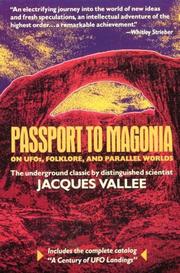
Passport to Magonia: from folklore to flying saucers
Explores cultural and historical dimensions of recurring UFO narratives.

eBay marketplace picks
Marketplace Samples
Live-tested eBay searches with available results related to this page.


Endnotes
1.
Source: heraldo.es
Link:https://www.heraldo.es/noticias/aragon/2017/11/19/ovnis-pirineo-anos-despues-del-incidente-pusilibro-1208936-300.html
2.
Source: misteriosdelaire.blogspot.com
Link:https://misteriosdelaire.blogspot.com/2014/03/el-ovni-de-pusilibro.html
3.
Source: eu.wikiloc.com
Link:https://eu.wikiloc.com/ibilbide-senderismo/pusilibro-o-puchilibro-8299798
4.
Source: costraypus.blogspot.com
Title: Amuso: Pusilibro desde el Castillo de Loarre. Ruta circular (cresta SE
Link:https://costraypus.blogspot.com/2020/01/pusilibro-desde-el-castillo-de-loarre.html
5.
Source: pdipb.blogspot.com
Title: ascension al puchilibro 1597 m desde el
Link:https://pdipb.blogspot.com/2018/05/ascension-al-puchilibro-1597-m-desde-el.html
6.
Source: disfrutandodelcamino.es
Title: DISFRUTANDO DEL CAMINOPuchilibro y Ermita Virgen de la Peña
Link:https://www.disfrutandodelcamino.es/prepirineo/2022/puchilibro-1595-m-y-ermita-virgen-de-la-pena/
7.
Source: heraldo.es
Title: defensa publica informes sobre ovnis vistos aragon 1124384 300
Link:https://www.heraldo.es/noticias/aragon/2016/10/23/defensa-publica-informes-sobre-ovnis-vistos-aragon-1124384-300.html
8.
Source: heraldo.es
Title: defensa publica los expedientes ovni desclasificados 1123727 305
Link:https://www.heraldo.es/noticias/nacional/2016/10/23/defensa-publica-los-expedientes-ovni-desclasificados-1123727-305.html
9.
Source: heraldo.es
Title: defensa avistamientos ovni secreto estado 1660985
Link:https://www.heraldo.es/noticias/nacional/2023/06/25/defensa-avistamientos-ovni-secreto-estado-1660985.html
10.
Source: misteriosdelaire.blogspot.com
Title: unas fotografas muy poco creibles 30
Link:https://misteriosdelaire.blogspot.com/2005/09/unas-fotografas-muy-poco-creibles_30.html
11.
Source: misteriosdelaire.blogspot.com
Title: un robot extraterrestre en burgos
Link:https://misteriosdelaire.blogspot.com/2011/04/un-robot-extraterrestre-en-burgos.html
12.
Source: es.wikiloc.com
Title: pusilibro 21594876
Link:https://es.wikiloc.com/rutas-senderismo/pusilibro-21594876
13.
Source: es.wikiloc.com
Title: pusilibro o puchilibro 8299798
Link:https://es.wikiloc.com/rutas-senderismo/pusilibro-o-puchilibro-8299798
14.
Source: es.wikiloc.com
Title: puchilibro 1595 mts circular desde parking castillo de loarre huesca 205301295
Link:https://es.wikiloc.com/rutas-senderismo/puchilibro-1595-mts-circular-desde-parking-castillo-de-loarre-huesca-205301295
15.
Source: viajesyrutasdesenderismo.blogspot.com
Title: ascension al puchilibro 1595 metros
Link:https://viajesyrutasdesenderismo.blogspot.com/2023/05/ascension-al-puchilibro-1595-metros.html
16.
Source: bibliotecavirtual.defensa.gob.es
Link:https://bibliotecavirtual.defensa.gob.es/BVMDefensa/exp_ovni/es/consulta/indice_campo.do?campo=idtitulo
Source snippet
› Listado de títulos...
17.
Source: bibliotecavirtual.defensa.gob.es
Link:https://bibliotecavirtual.defensa.gob.es/BVMDefensa/es/consulta/registro.do?id=38121
18.
Source: eldiariodehuesca.com
Title: El Diario de Huesca El avistamiento de Puchilibro
Link:https://www.eldiariodehuesca.com/opinion/como-punos/avistamiento-puchilibro_23517_102.html
19.
Source: youtube.com
Link:https://www.youtube.com/watch?v=iriwNZtrVn4
20.
Source: youtube.com
Link:https://www.youtube.com/%40misteriosdelaire-n9w
21.
Source: ms-my.facebook.com
Link:https://ms-my.facebook.com/HayluzentuCorazon/photos/203040830648928/
Additional References
22.
Source: youtube.com
Title: UFOs and the Crisis of Reality | Aliens, Myth, Psyops or Something Stranger?
Link:https://www.youtube.com/watch?v=Jv_PYCiGHk0
Source snippet
The Hardest UFO Cases to Dismiss: Something Is Flying Around and We Don't Know What It Is...
23.
Source: youtube.com
Link:https://www.youtube.com/watch?v=9dJn86mC7iw
Source snippet
The Most Relaxing UFO & UAP Facts to Fall Asleep To...
24.
Source: youtube.com
Title: The Real Story Behind The War Of The Worlds Panic
Link:https://www.youtube.com/watch?v=8gob2DpnZqE
Source snippet
UFOs and the Crisis of Reality | Aliens, Myth, Psyops or Something Stranger?...
25.
Source: youtube.com
Title: How scientists use math to help explain UFO videos
Link:https://www.youtube.com/watch?v=diPXow8zgc8
Source snippet
The Real Story Behind The War Of The Worlds Panic...
26.
Source: instagram.com
Link:https://www.instagram.com/p/DS_1NvQDjdF/
27.
Source: ivoox.com
Link:https://www.ivoox.com/en/3x1-el-ovni-del-pusilibro-entrevista-a-audios-mp3_rf_114868500_1.html
28.
Source: bookfinder.com
Link:https://www.bookfinder.com/author/antonio-ribera/
29.
Source: instagram.com
Link:https://www.instagram.com/p/DYICFrsDhp4/?hl=en
30.
Source: instagram.com
Link:https://www.instagram.com/reel/CykBehvPAuE/
31.
Source: amazon.co.uk
Link:https://www.amazon.co.uk/Ovnis-en-Iberoam%C3%A9rica-y-Espa%C3%B1a/dp/8401470838?tag=searcht-20
Topic Tree